
Beat Street: From Film to Broadway
Who would have imagined those backspins would help inspire a Broadway musical four decades later?
Nas announced his involvement at the film’s 40th-anniversary Tribeca screening in June 2024. The adaptation now brings together director Schele Williams, playwright Kristoffer Diaz, and music supervisor Jason Michael Webb, with Nas creating new material and expanding the original soundtrack.
Read the creative-team announcement. The developing musical opens another chapter for a film whose story began with young artists making themselves heard.

From left, Michael Holman, Nas, and Arthur Baker, collaborators on the developing Beat Street musical.
Beat Street at 40 — From Club Negril to the Tribeca Red Carpet

Powerful Pexster presents I Had a Dream alongside Michael Holman, Mr. Wave, and Lisa Lee at Beat Street’s 2024 Tribeca anniversary celebration.
That new chapter took shape amid a celebration of the people who helped create the original film. At the 2024 Tribeca anniversary screening, Tony “Powerful Pexster” Lopez joined Lisa Lee, Michael Holman, and Mr. Wave on the red carpet, presenting his book, I Had a Dream.
For Pexster, preserving this history means connecting personal experience with the next generation. His writing, music, lectures, and youth programs carry forward the creativity and peaceful competition seen on screen. To understand what the musical can celebrate, we return to the film’s Bronx roots.
The Film Behind the Musical
The House Party and Hip-Hop’s Bronx Roots
In Beat Street (1984), an abandoned Bronx building becomes a place to dance, perform, and be heard. Amid hardship and limited resources, young people create their own gathering space. DJs extend the breaks, MCs rhyme over them, and breakers respond through movement.
The Us Girls—MC Sha-Rock, Lisa Lee, and Debbie D—bring women’s voices to the center of the party with “Us Girls Can Boogie Too”, also featured on the original soundtrack. Their performance shows how a neighborhood gathering could become a stage for cultural expression.
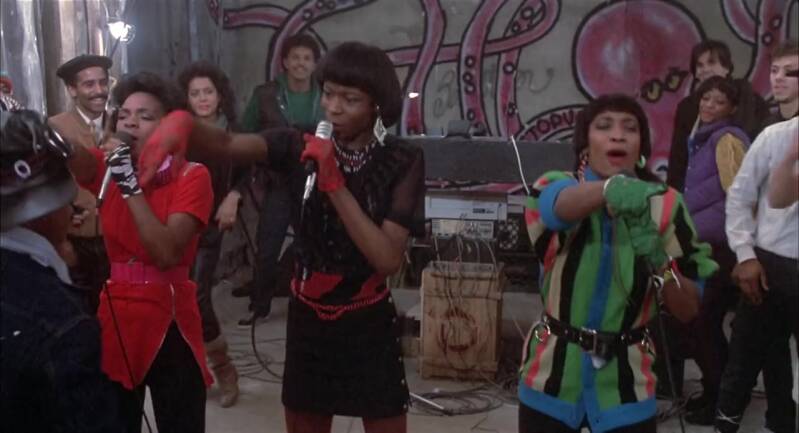
The Us Girls—MC Sha-Rock, Lisa Lee, and Debbie D—perform in the house-party scene from Beat Street (Lathan, 1984).
From The Bronx to the World Stage
Within that same gathering, the dance floor becomes a place to test skill and earn recognition. Powerful Pexster’s house-party battle with Kuriaki, subway exchange with Doze, and Roxy battle reveal breaking’s musicality, improvisation, athleticism, and individual style.
These scenes brought the energy of the battle circle to international audiences. For Pexster, they also express a principle that continues to guide his work: “We don’t fight—we break.”

Powerful Pexster faces off with Kuriaki in the house-party scene from Beat Street (Lathan, 1984).
Mr. Wave and Doug E. Fresh: Style in Motion
The party’s identity comes through clothing and sound as clearly as dance. With his red hat, striped shirt, and expressive movement, Tony “Mr. Wave” Wesley embodies the connection between fashion, attitude, and performance.
Doug E. Fresh contributes another form of invention through beatboxing, using his voice to create percussion. His performance with the Treacherous Three in “Santa’s Rap” captures that early contribution. His later collaboration with Slick Rick on “La-Di-Da-Di” helped carry vocal rhythm to wider audiences.
Together, these artists show how personal style helped shape a shared culture.

Mr. Wave and Doug E. Fresh during Lisa Lee’s performance in the house-party scene from Beat Street (Lathan, 1984).
The Roxy Battle: Artistry and Athleticism
At the Roxy, individual expression meets organized competition. The film’s battle sequence brings musical interpretation, physical control, and improvisation into a shared arena.
Breaking’s Olympic debut at Paris 2024 later placed those athletic demands before a global sporting audience. For Pexster, the developing musical offers another opportunity to celebrate breaking’s artistry while recognizing the communities that shaped it.
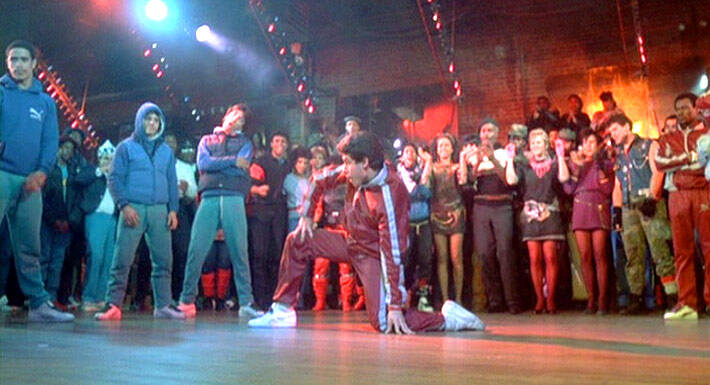
Powerful Pexster during the Roxy battle sequence in Beat Street (1984).
Double K’s Big Break and DJ Kool Herc’s Legacy
Behind the dancers stands the DJ. Kool Herc’s pioneering use of extended percussion breaks helped give dancers more time to improvise, establishing a foundation for hip-hop’s relationship between recorded music and movement.
In Beat Street, Herc gives Kenny “Double K” Kirkland, played by Guy Davis, a weekend job following his Burning Spear audition. A talent scout later hears Kenny perform and offers him an opportunity at the Roxy. His journey shows how local recognition could open a path toward a larger stage. Explore the AFI film synopsis.

DJ Kool Herc with Kenny “Double K” Kirkland, played by Guy Davis, at the Burning Spear in Beat Street (Lathan, 1984).
From the Bronx Train Yard to the Big Screen
Who would’ve thought subway graffiti would reach galleries and movie screens worldwide? Back then, our gallery opened when the train left the station.
In 1978, Tony “Powerful Pexster” Lopez lived near the C and D train yard off Jerome Avenue, on the same block as Tracy 168, founder of the Wild Style crew. Pex remembers tagging cars on the D, 4, and CC lines with Mex 183rd, seeing Cap around the yard, and crossing paths with Cope. A tag could carry your name across the city. Painting over it could turn a rivalry violent.
Downtown 81 captured other sides of New York’s art and music scenes. In Beat Street, the rivalry drives the story, and a name on a train tells the city, I was here.
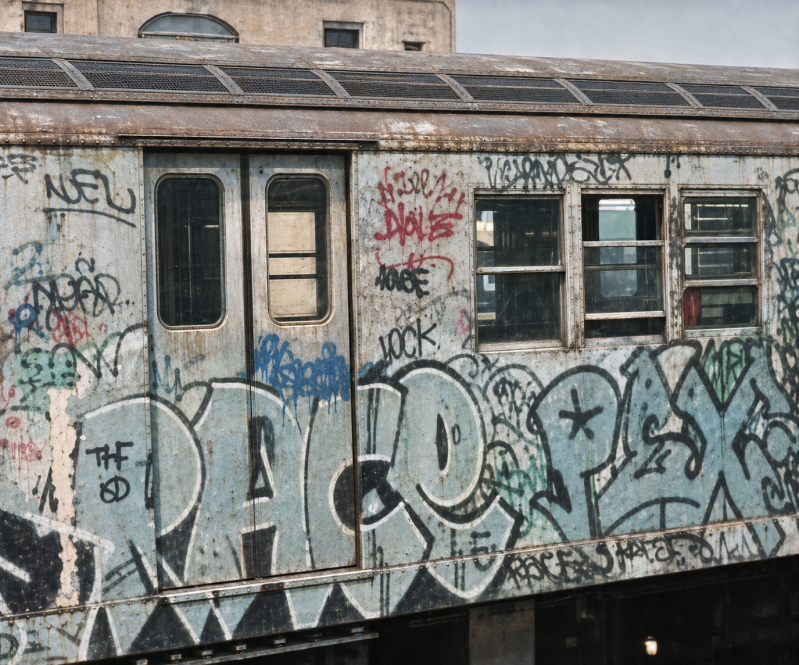
New York City subway car vintage featuring graffiti by Tony “Powerful Pexster” Lopez next to Race. Hernandez, "Cone" E. (1981).
From Subway Steel Films to Broadway Stage
In Beat Street, a painted train carries a writer’s name across the city. When Spit paints over Ramo’s piece, their rivalry turns deadly. The finale brings the community together to honor Ramo through music and dance. Read the AFI film synopsis.
As Beat Street takes shape as a Broadway musical, would love to see graffiti artists create original pieces live onstage, with DJs, MCs, and breakers performing alongside them. Imagine the audience watching a blank subway car fill with color, one letter at a time. Giving the writers a place onstage would honor the art at the heart of Ramo’s story. Explore the musical’s development.

Ramon discovers that Spit has marked his painted subway car, setting off a confrontation in Beat Street (Lathan, 1984)
The Finale: A Community Finds Its Voice
They journeyed from Ghetto Brothers peace treaty to Kool Herc Breakbeat concept rap music, graffiti and breaking attributes. Attracted audiences of all walks of life, the film’s narrative, artists merged together in remembrance of the film's tragedy. At the Roxy's, Melle Mel and the Furious Five perform “Beat Street Breakdown,” turning the finale into a collective response to a Graffiti artist loss.
The music, dance, and visual art connect the film’s characters throughout their search for recognition. The Broadway adaptation offers an opportunity to revisit those relationships and introduce new audiences to the communities behind the culture.
Hear that history in the original soundtrack, Volume 1 and Volume 2.

Melle Mel and the Furious Five perform “Beat Street Breakdown” in the finale of Beat Street (Lathan, 1984).
Preserving the Stories Behind the Film

Promotional artwork for Beat Street: Where Are They Now?, from Reel Sung Productions.
The story continues through the people who lived it. Mr. Wave’s Reel Sung Productions revisits that history in the announced documentary series Beat Street: Where Are They Now?, bringing together original cast members and cultural contributors, including Powerful Pexster.
Their recollections offer another way to study the film’s influence through firsthand experience. Alongside the developing musical, this work invites audiences to discover the artists behind the images and consider how their creativity continues to inspire.